
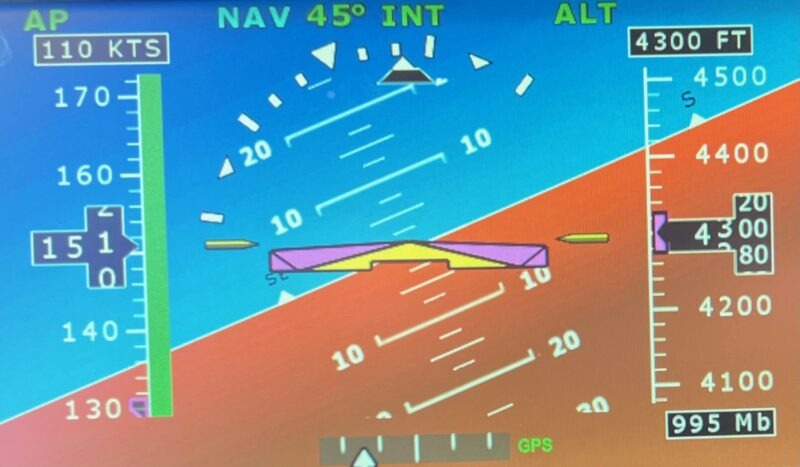
Rate-Based vs. Attitude-Based Autopilots: What’s the Difference?
For most pilots an autopilot is simply a box that keeps the wings level, follows a heading and, in more sophisticated installations, flies an approach. But there is a fundamental difference in how autopilots know what the airplane is doing.
Traditionally, light-aircraft autopilots fall into two broad categories: rate-based and attitude-based systems.
Both can work very well. Both have been installed in thousands of airplanes. But they obtain their information differently, and that has consequences for how they fly, how they behave in turbulence and what happens when one of their sensors fails.
The rate-based autopilot
A rate-based autopilot does not primarily ask: What is the attitude of the airplane?
Instead, it asks: How quickly is the airplane rotating?
The classic sensor for this is the turn coordinator or a dedicated rate gyro. It measures roll/yaw rate, and the autopilot uses that information together with heading, navigation and sometimes altitude information to command the servos.
This approach became very popular in general aviation because it was comparatively simple and inexpensive. It also provided an important degree of independence from the aircraft’s attitude indicator.
If the vacuum-driven attitude indicator failed, for example, a rate-based electric autopilot could continue flying the airplane.
That was a significant advantage in the days of vacuum pumps and mechanical gyros.
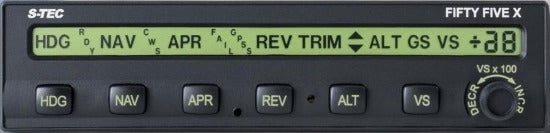
A good example is the S-TEC 55X, which became extremely common in Cirrus aircraft and many other high-performance singles. The 55X is fundamentally a rate-based autopilot. It can fly headings, intercept and track navigation signals, hold altitude and fly approaches very competently without using the attitude indicator as its primary roll reference. And under normal conditions it works remarkably well.
Where rate-based systems show their limitations
The weakness becomes more apparent in turbulence.
Imagine the airplane receives a sudden gust and rolls five degrees to the right. An attitude-based system immediately knows that the aircraft is now five degrees right-wing-low.
A rate-based system primarily sees the movement that produced that attitude. Once the roll stops, the rate itself may be close to zero even though the airplane is still banked.
The control system can infer and correct what is happening using its other inputs, but it does not possess the same direct knowledge of aircraft attitude.
This is one reason why older rate-based autopilots can sometimes appear to hunt, wander or make a series of small corrections in turbulence rather than smoothly returning the aircraft to the desired attitude.
That does not make them bad autopilots. A properly rigged and adjusted S-TEC, for example, can fly very nicely. But the underlying control philosophy has limitations.
The attitude-based autopilot
An attitude-based autopilot knows the actual pitch and bank attitude of the aircraft.
Older systems obtained this information from an attitude gyro or a dedicated flight director gyro. Modern systems normally receive it from an AHRS – Attitude and Heading Reference System – containing solid-state sensors rather than spinning mechanical gyros.
This gives the autopilot a much more complete picture.
If turbulence suddenly rolls the airplane seven degrees left, the system doesn’t merely see that a roll occurred. It knows that the airplane is now seven degrees left-wing-low, knows the roll rate and can calculate the appropriate correction.
Modern digital autopilots go considerably further. They can combine attitude, angular rates, airspeed, altitude, vertical speed, GPS navigation and other data into their control laws.
The result is generally smoother and more precise control, particularly when conditions are not perfectly calm.
This is why the modern generation of integrated glass-cockpit autopilots feels noticeably different from many older rate-based systems.
Why rate-based autopilots existed in the first place
Looking at today’s MEMS-based AHRS units, one might wonder why anyone would design an autopilot around rate information rather than attitude.
The answer is largely historical.
Reliable attitude gyros were expensive, mechanical and frequently powered by the aircraft’s vacuum system. Building an autopilot that could use an independent electrically powered rate gyro provided simplicity, lower cost and valuable redundancy.
There was another practical advantage: certification.
Companies such as S-TEC developed autopilots that could be installed in an enormous range of existing aircraft without requiring a completely integrated flight-control architecture. This made sophisticated functions such as GPSS steering and altitude hold available to aircraft that had originally left the factory with relatively basic avionics.
For decades that was an excellent compromise.
Modern electronics changed the equation. Small solid-state attitude sensors became extremely reliable and comparatively inexpensive, making attitude-based control practical even for retrofit autopilots.
The failure question
There is an interesting trade-off here.
A traditional rate-based autopilot can be wonderfully independent. If your vacuum attitude indicator tumbles, the electrically driven autopilot may not care at all.
An attitude-based autopilot, on the other hand, is only as good as its attitude source.
Lose the AHRS supplying the autopilot and you may lose the autopilot as well.
Modern integrated systems compensate for this with highly reliable solid-state sensors, backup attitude sources, sophisticated failure detection and, in some installations, considerable redundancy. But it is worth understanding the architecture of the particular airplane you are flying.
A glass cockpit containing several screens does not necessarily mean that there are several completely independent attitude sources behind them.
Rate-based vs. attitude-based
| Rate-based autopilot | Attitude-based autopilot | |
|---|---|---|
| Primary information | Angular/turn rate | Actual pitch and bank attitude |
| Traditional sensor | Turn coordinator/rate gyro | Attitude gyro |
| Modern sensor | Solid-state rate sensors | AHRS |
| Turbulence performance | Generally less refined | Generally better |
| Control response | More reactive | More anticipatory/direct |
| Smoothness | Good when properly adjusted | Usually superior |
| Independence from attitude indicator | Major traditional advantage | Depends on system architecture |
| Complexity | Historically simpler | Historically more complex |
| Modern capabilities | Limited by architecture | Excellent |
| Typical application | Older retrofit GA autopilots | Modern integrated and retrofit systems |
Examples of rate-based autopilots
The exact architecture varies by version and installation, but well-known examples of the traditional rate-based philosophy include:
- S-TEC System 20 / 30
- S-TEC System 40 / 50
- S-TEC 55 / 55X
- S-TEC 60-series systems
- Century rate-based systems such as the Century I
The S-TEC family is probably the best-known example because these autopilots were installed in such huge numbers of certified general-aviation aircraft.
Examples of attitude-based autopilots
Classic and modern attitude-based systems include:
- King KFC 150 / KFC 200 / KFC 225
- Garmin GFC 700
- Garmin GFC 500
- Garmin GFC 600
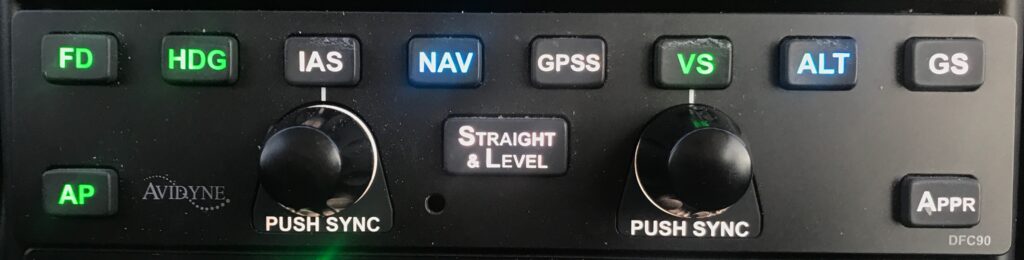
- Avidyne DFC90
- Genesys/S-TEC 3100
- BendixKing AeroCruze 100 / TruTrak-derived systems
- Dynon integrated autopilot systems
There are important architectural differences within this group. A KFC 200 using a mechanical attitude gyro and a modern GFC 500 receiving digital attitude information from a solid-state Garmin GI 275 or G5 belong to very different technological generations. But both are fundamentally different from the classic rate-based concept because attitude information is central to the control system.
The practical difference in the cockpit
In smooth air the distinction may be surprisingly difficult to notice.
A well-maintained rate-based autopilot can track a GPS course with impressive accuracy and hold altitude almost perfectly. Flying along at 8,000 feet on a calm summer morning, there may be little reason to wish for anything else.
In turbulence the difference becomes more obvious.
Modern attitude-based autopilots generally make smaller and more intelligent corrections. They know not only that the aircraft is moving but also where it is in space. Add faster digital electronics, better servos and more sophisticated control algorithms, and the result can be considerably smoother.
There is also much more that can be done with that information.
Modern systems can provide flight-envelope protection, underspeed protection, overspeed protection, automatic level modes and coupled go-arounds. Garmin’s Electronic Stability and Protection, for example, can intervene even when the autopilot is nominally switched off if the aircraft exceeds predefined pitch or bank limits.
That is far beyond what the designers of the early rate-based autopilots had in mind.
Is attitude-based automatically better?
Technically, for a modern autopilot, mostly yes.
Having accurate attitude information gives the flight-control computer considerably more information about what the airplane is actually doing. Combined with modern digital sensors and control algorithms, this allows better control and additional safety functions.
But that does not mean an older rate-based autopilot should automatically be replaced.
An S-TEC 55X that is properly maintained, correctly rigged and connected to a modern navigator remains a very capable IFR autopilot. It has another attractive quality: pilots have accumulated decades of experience with it, and its behavior and failure modes are well understood.
The more useful question is therefore not simply whether an autopilot is rate-based or attitude-based.
It is what information the autopilot receives, how redundant those sources are, what happens when one of them fails – and how well the pilot understands the system. Because regardless of whether the computer measures degrees of bank or degrees per second, there is still one component in the system that should know exactly what the airplane is doing. The pilot.
