
Massive or Fine-Wire?
Spark Plugs for the Cirrus SR22
Spark plugs aren’t normally the first thing that comes to mind when discussing a Cirrus SR22. Avionics, parachutes and engine management tend to generate rather more conversation. Yet when the plugs in a normally aspirated SR22 are due for replacement, there is an interesting choice to make: conventional massive-electrode plugs or fine-wire plugs.
The SR22 NA is powered by Continental’s six-cylinder IO-550-N, and it needs twelve spark plugs—two per cylinder, fired by two independent ignition systems. Both massive-electrode and fine-wire aviation plugs are available in suitable configurations, subject, of course, to the approved plug specifications for the particular engine and aircraft.
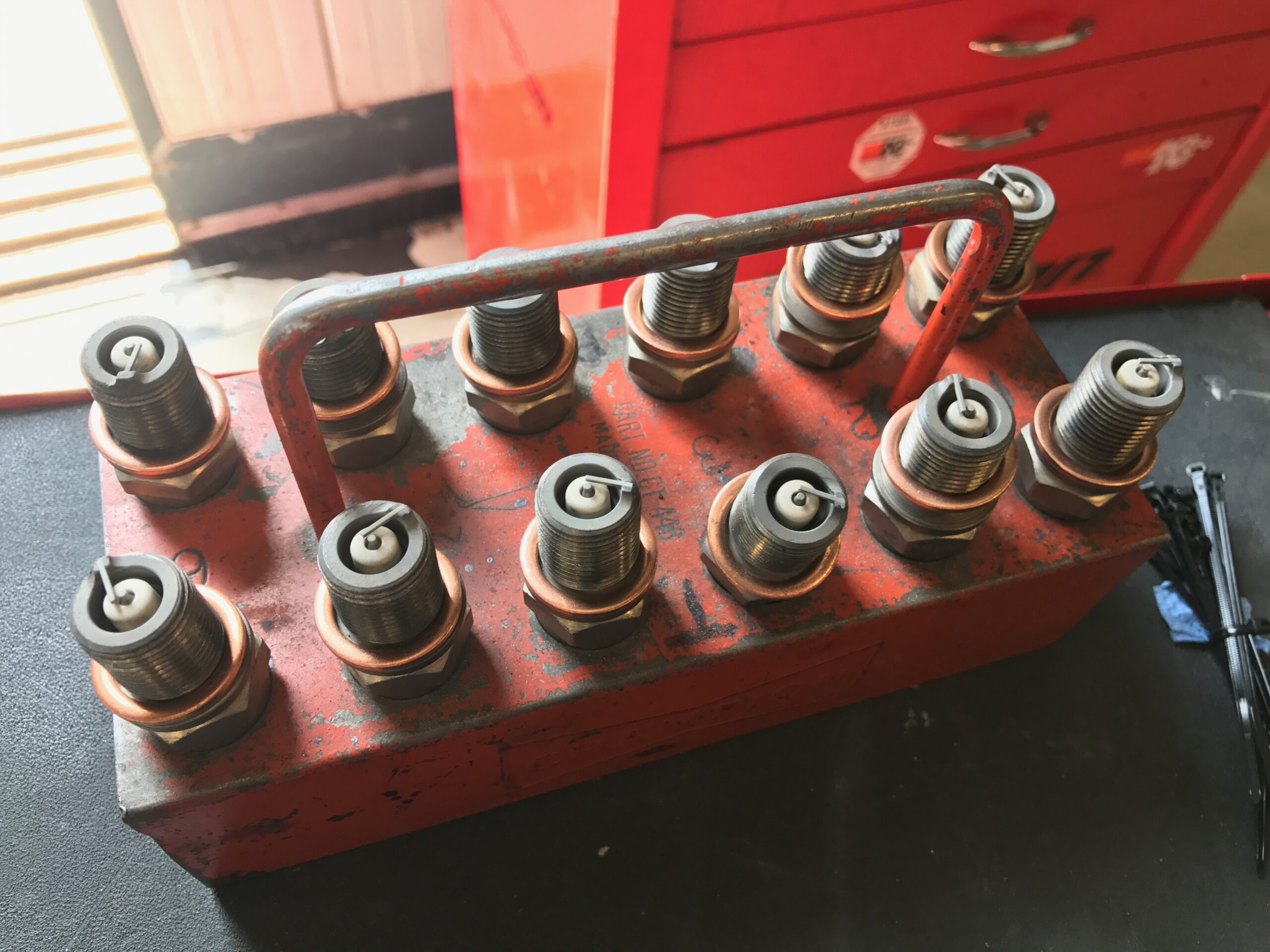
The difference between them is surprisingly easy to see.
A massive-electrode plug typically has two substantial ground electrodes extending over the centre electrode. It is a simple, proven design and considerably cheaper than a fine-wire plug. Fine-wire plugs use much smaller ground electrodes, generally made from expensive, erosion-resistant materials such as iridium. Apart from looking rather more delicate, this leaves the spark much less obstructed.
And that has some practical consequences.
The case for massive electrodes
Massive-electrode plugs have been flying perfectly happily in piston aircraft for decades. Their strongest argument is price.
A set of twelve represents a considerably smaller investment than twelve fine-wire plugs, and if the engine runs cleanly and the plugs are regularly removed, cleaned, inspected, gapped and rotated, they can give perfectly satisfactory service.
There is, however, a characteristic problem. The relatively large electrodes provide more places for combustion deposits to accumulate. Lead fouling is particularly relevant because the IO-550 normally spends its life drinking 100LL. This doesn’t mean that massive plugs constantly foul. Proper leaning helps enormously. But anyone who has taxied a large Continental around at an unnecessarily rich mixture setting and then discovered an unhappy magneto check has encountered the basic problem.
Massive electrodes also erode with use. As the gap increases, more voltage is required to produce the spark. Eventually the electrodes can no longer simply be regapped and the plug has reached the end of its useful life.
Fine-wire plugs
Fine-wire plugs attack several of these problems at once.
The much smaller electrodes expose the spark more directly to the fuel-air mixture and tend to resist fouling better. They also generally retain an acceptable gap for much longer.
Fine-wire plugs can also produce smoother ignition, particularly when operating lean of peak, where the mixture becomes more difficult to ignite. That’s relevant to an SR22. The IO-550-N is a very good lean-of-peak engine when correctly set up, and many SR22 owners routinely operate it that way in cruise.
I have been using Tempest URHB32S fine-wire plugs in my own SR22 G2 since 2014. They have now accumulated about 700 flying hours, and I haven’t had any issues with them. That’s a fairly convincing practical demonstration of one of the main arguments for fine-wire plugs: longevity.
Don’t expect a dramatic increase in horsepower. Installing fine-wire plugs does not suddenly transform a 310-hp IO-550 into something else. The advantages are more subtle: cleaner operation, less tendency to foul, potentially smoother lean operation and considerably longer plug life.
There is, however, one rather substantial disadvantage. The price. A set of twelve Tempest URHB32S plugs currently costs around €2,000. Spark plugs suddenly become something you notice on the maintenance invoice.
Massive versus fine-wire
| Massive electrode | Fine-wire | |
|---|---|---|
| Purchase price | Much cheaper | Around €2,000 for 12 URHB32S at present |
| Service life | Shorter | Usually substantially longer |
| Resistance to fouling | More susceptible, particularly to lead deposits | Better |
| Maintenance | More frequent cleaning and regapping | Generally less |
| Lean-of-peak operation | Works perfectly well when in good condition | Often smoother and more tolerant |
| Electrode erosion | Relatively high | Low |
| Up-front cost | The obvious winner | The painful part |
| Long-term economics | Good if plug life and maintenance are satisfactory | High purchase price partly offset by longer life |
So which would I put into an SR22? In my case, that question has already been answered. After roughly 700 hours with the same type of Tempest fine-wire plugs and no problems, I see little reason to change.
If the aircraft flies relatively few hours and the plugs are being inspected regularly anyway, there is nothing fundamentally wrong with massive-electrode plugs. They are proven, inexpensive and entirely capable of doing the job. For an SR22 that flies a lot, however, particularly one routinely operated lean of peak, I find the argument for fine-wire plugs rather persuasive. Yes, €2,000 for twelve spark plugs sounds slightly ridiculous.
But after 700 trouble-free hours, the price doesn’t look quite as ridiculous as it did when they were new.
